

Train in Waves, Not Lines
How athletes unlocked the rhythm of adaptation and how you can use it to get stronger, age better, and feel more resilient

When I was sixteen, the gym smelled like ambition: iron, sweat, and cologne. I worked at a sprawling health club in New Jersey, first as a lifeguard and later at the front desk taking payments and handing out towels. There was a lot of fluorescent lycra, jammer shorts, and a constant background hum of clanking weight stacks.
Everyone who walked in seemed to change a little, not just their bodies but their energy. They stood taller, laughed louder, and moved with more confidence.
Some came to lose weight, others to sculpt their beach bodies. The basketball courts thundered, racquetballs ricocheted, and I soaked it all in. The gym felt electric and alive. I was hooked so much that I decided at that age I could not imagine working in any other field, and that early pull sent me on a path I have turned into an incredible career.
But here is the truth. I was not an athlete. When I wanted to run, I ran. When I wanted to hike, I hiked. I thought gyms were for looking good or losing weight, or for the few who treated bodybuilding as its own sport. I figured the best way to get better at something was simply to do more of it.
For most of human history, that is exactly how athletes trained.
The Turning Point
For thousands of years, athletes improved through repetition. Wrestlers wrestled, runners ran, and if they survived the training, they were considered fit. There was no off-season, no recovery block, just more of everything until you succeeded or broke down trying.
Then came the 1950s and the Cold War. Nations were battling for dominance not only in space and science but in sport. Soviet and Eastern Bloc scientists searching for better international results began studying how training could be sequenced, how deliberate cycles of work and rest could produce higher peaks of performance.
The concept that emerged became one of the most powerful ideas in human performance: periodization, our second athletic principle.
If sequencing is how we organize individual workouts, the “what first, what next” structure of training, periodization zooms out. It is the rhythm of an entire season or year, built from those sequences and arranged into waves of load and recovery. Sequencing is the sentence; periodization is the full paragraph.
Instead of pushing endlessly forward, athletes began training in waves. They built up, backed off, recovered, and surged again, guided by the rhythm of physiology rather than the myth of constant grind.
Why It Works
The genius of periodization is simple. We do not get stronger during training. We get stronger after training. The workout is the signal; recovery is the adaptation.
This is the foundation of every modern training plan and one of the most misunderstood.
Your body does not improve because you punished it. It improves because you gave it a reason and the space to rebuild stronger than before.
That cycle of stress, recovery, and adaptation is the biological heartbeat of progress. It is the same principle that helps Olympic sprinters run faster and helps a sixty-year-old skier rebuild strength after a knee injury.
How to Train Like an Athlete, Even if You Are Not One
Many popular programs focus on lists of movements or catchy challenges like AMRAPs (as many reps as possible), boot camps, or 30-day tone-ups. Following the science of sport shifts the focus from doing more to doing better.
Our approach, modeled on both early pioneers and modern sport-science innovators, includes two essential ingredients:
A natural cycle or wave that includes deliberate peaks and valleys of effort, rest, and recovery so adaptation can take hold.
A meaningful load that provides enough challenge to send a strong signal to the body. This might begin with body weight or small bands but eventually requires resistance heavy enough to push the system to adapt.
Without both, progress stalls. Too much load too often and the body breaks down just as athletes did before periodization. Too little and you hover in the doldrums of fatigue without improvement: sore, tired, but not stronger.
Finding the balance between intensity and rhythm is what unlocks long-term progress.
A Case in Point: Amy’s Story
My wife, Amy, found herself at a familiar crossroads. Post-menopause, she was concerned about bone and joint health. She tried to stay consistent with online barre workouts but nagging aches made it hard to stay on track. She wanted to train at home, not at a gym, but she needed a plan that worked.
Together we kept barre as one of her core conditioning blocks and paired it with spinning on her bike. Then we added two short strength sessions each week with lower reps, heavier weights, and a focus on control and recovery.
The result was less soreness, more energy, and visible strength gains. Her program finally hit the sweet spot between load and rest, allowing her body to adapt and thrive.
Full Circle
For me, the gym still feels like home. The clang of iron and the low hum of effort still bring me joy. But my workouts today look nothing like those teenage days in New Jersey.
Gone are the marathon sessions moving from one machine to the next. Now my training is short, purposeful, and built around targeted systems: strength, power, and endurance, each rising and falling in its own rhythm.
That is the real secret of athletic training. Progress is not built through constant intensity but through intentional flow.
Putting It Into Practice
Application in Action: Finding the Right Wave
Beginner Example
Goal: Build foundational leg strength and confidence.
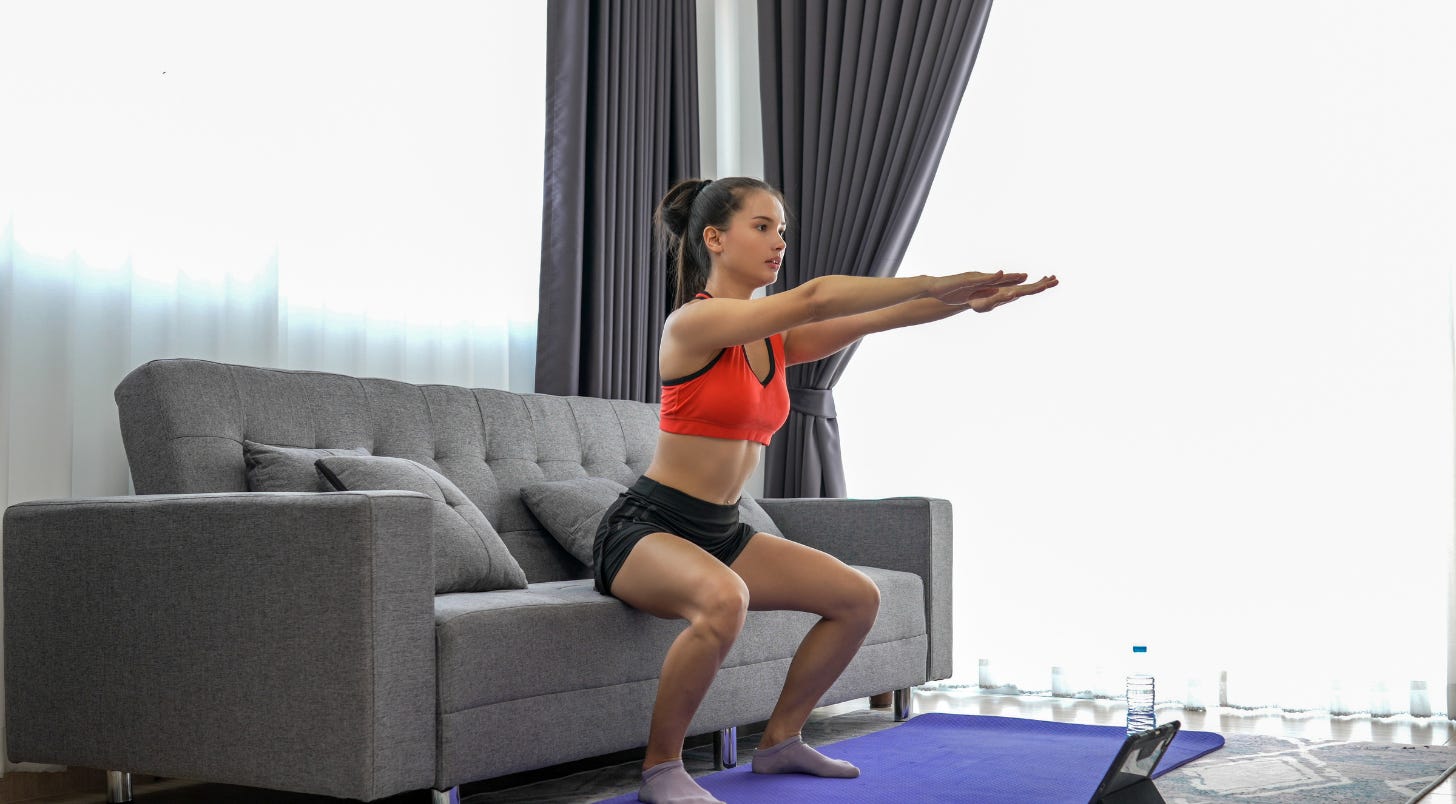
Movement: Chair squat. Start with body weight only.
Plan: Keep workouts twice weekly. Perform up to 3 sets of 8 reps, resting between sets. When you can complete all sets with good form and no strain, begin holding a light weight (5–10 lbs) for overload.
Why It Works: Focused, low-rep, moderate-load training provides enough stress for adaptation while leaving time for recovery.
Skier Example
Goal: Maintain strength and endurance through ski season.
Movement: Alternate kettlebell goblet squats and single-leg Romanian squats.
Plan: Alternate sessions each week: goblet squats one day, single-leg RDLs the next. Perform 3 sets of 8 controlled reps after a short warm-up. Progress by adding small amounts of weight as form allows.
Why It Works: Alternating patterns and maintaining load intensity build resilience without overtraining, matching the wave rhythm of athletic periodization.
Just Starting Out
Pick two non-consecutive days per week to start.
Begin with a simple movement like chair squats if you are new to exercise.
Start with 8 repetitions. Rest, then try another set.
If you can complete 3 sets comfortably, stop there.
As your control and strength improve, add a small amount of resistance.
Keep the focus on form, steady progress, and giving yourself recovery days between sessions.
Next Time
Most of us are not chasing medals. We are chasing longevity, fewer aches, more good days, and a body that still feels like ours in our sixties and seventies.
So what does this athletic rhythm look like for the rest of us?
In the next post, we will step outside the gym and look at something far older and more natural: the movement built into everyday life.
Coming Up: The Unseen Training of Everyday Life — How NEAT Shapes Longevity